What Is Procurement? (Detailed Point-Wise Explanation)
- Procurement is a structured sourcing process:
It starts with identifying business requirements and ends with evaluating supplier performance after delivery. - It focuses on value, not just price:
Procurement evaluates total cost, quality, reliability, and long-term benefits rather than choosing the cheapest option. - Procurement supports business strategy:
Strategic sourcing decisions directly affect profitability, operational efficiency, and risk management. - It ensures compliance and governance:
Procurement processes follow legal, ethical, and organizational policies to reduce risk and fraud.
Stages in the Procurement Process
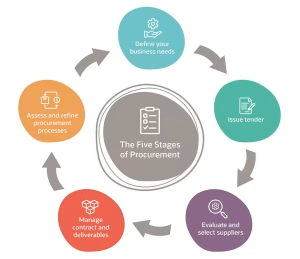
Key Procurement Stages Explained in Detail
- Need Identification:
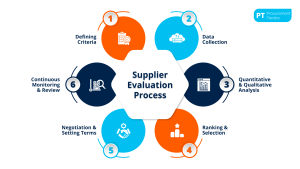
Business units clearly define what goods or services are required, including quantity, specifications, quality standards, and timelines. - Supplier Identification and Evaluation:
Potential suppliers are identified through market research, RFPs, or RFQs and evaluated on cost, experience, financial stability, and reliability. - Contract Negotiation:
Procurement teams negotiate pricing, delivery schedules, warranties, payment terms, and service level agreements to protect business interests. - Ordering and Receiving:
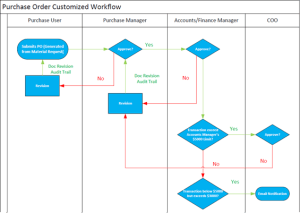
Purchase orders are issued, deliveries are tracked, and goods or services are verified against agreed specifications. - Supplier Performance Evaluation:
Suppliers are reviewed based on quality, delivery performance, cost adherence, and responsiveness to ensure continuous improvement.
Procurement Stages Summary Table
| Stage | Key Activities |
| Need Identification | Requirement definition and approval |
| Supplier Selection | Vendor research and comparison |
| Negotiation | Finalizing terms and contracts |
| Ordering | Issuing and tracking purchase orders |
| Evaluation | Monitoring supplier performance |
Types of Procurement (Detailed Explanation)
Procurement methods vary depending on operational needs, industry, and strategic goals.
- Direct Procurement:
Involves acquiring raw materials or components directly used in manufacturing or service delivery. Quality and continuity are critical. - Indirect Procurement:
Covers goods and services that support internal operations such as office supplies, software subscriptions, and facility services. - Services Procurement:
Focuses on hiring external service providers where performance is measured through SLAs rather than physical delivery. - Project Procurement:
Used for one-time or long-term projects requiring specialized equipment, contractors, or materials within fixed timelines and budgets. - Outsourcing Procurement:
Businesses transfer non-core functions to external experts to reduce costs and focus on strategic activities.
Types of Procurement Table
| Type | Purpose | Common Examples |
| Direct | Production support | Raw materials |
| Indirect | Operational support | Office supplies |
| Services | Expertise sourcing | IT, legal |
| Project | Project execution | Contractors |
| Outsourcing | Efficiency improvement | HR, logistics |
Procurement vs Purchasing (Expanded Explanation)
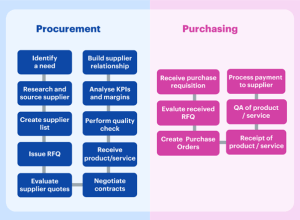
- Purchasing is transactional:
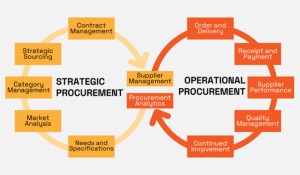
It focuses on placing orders, receiving goods, and completing payments. - Procurement is strategic and continuous:
It includes planning, supplier management, contract oversight, and long-term value creation. - Purchasing handles immediate needs:
Procurement supports long-term organizational goals and supplier partnerships.
Comparison Table
| Aspect | Purchasing | Procurement |
| Nature | Transactional | Strategic |
| Focus | Price and delivery | Value and risk |
| Time Horizon | Short-term | Long-term |
| Supplier Relationship | Limited | Managed |
| Decision Level | Operational | Strategic |
Why Procurement Is Important for Businesses
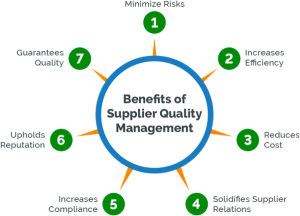
- Cost optimization:
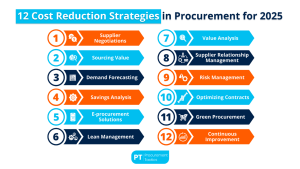
Effective procurement reduces costs through competitive sourcing and better contract terms. - Quality assurance:
Reliable suppliers ensure consistent quality and reduce defects or service failures. - Risk management:
Procurement minimizes supply disruptions, legal risks, and vendor dependency. - Operational efficiency:
Timely sourcing ensures smooth production and service delivery. - Supplier relationship management:
Strong partnerships improve innovation, reliability, and long-term value.
Business Benefits Table
| Benefit | Outcome |
| Cost Control | Reduced spending |
| Quality | Consistent standards |
| Compliance | Legal adherence |
| Efficiency | On-time delivery |
| Relationships | Long-term trust |
Conclusion
Procurement is a strategic business function that goes far beyond purchasing. By managing sourcing, suppliers, contracts, and performance effectively, organizations can reduce costs, improve quality, manage risk, and strengthen their competitive position. A well-defined procurement process supports sustainable growth and long-term success.